You’ve done the work: you’ve listened to podcasts and read the articles (include the first part in this series managing your emotions), and you’ve put the advice into practice. You’re managing your emotions strategically and effectively. Most of the time you are composed and professional in situations that used to create internal turmoil. However, you’re working with someone who does not have these skills. They wear their emotions on their sleeve to the detriment of themselves, their work, and their relationships with everyone around them. When you are working with them during one of their outbursts, you feel your pulse quicken and the situation becomes overbearing. How do you manage your emotions to remain professional and calm around an emotionally charged coworker?
The people around you at work might lose their cool for different reasons and under different circumstances. If a coworker is suddenly and uncharacteristically more emotional than normal, they could be experiencing a build-up of stress or difficulties in their personal life. They may only need some time to cool down, and the situation will resolve itself. Sometimes, groups of people will feed off of each other’s emotions during work-related crises. After the crisis passes, things resume as normal. These are temporary situations that can still necessitate managing your emotions around the heightened emotional states of others.
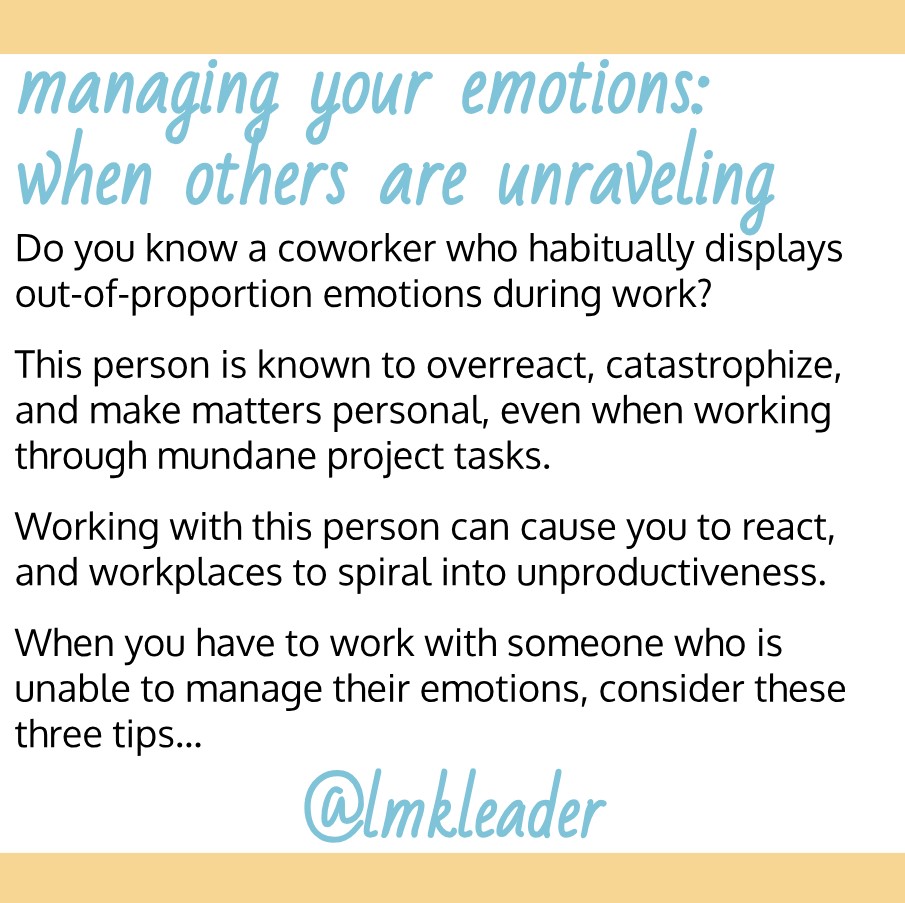
More frequently, you can encounter a coworker who objectively and habitually displays out-of-proportion emotions during work interactions. This person is known to overreact and be very dramatic, even when working through mundane project tasks. They complain, catastrophize and when they disagree with someone, they make matters personal. They can be outright mean at times. They may even be known to scream and yell.
The unfortunate reality is that this behavior should get them fired and it rarely will. It’s even possible that senior leadership has observed this person and does not care about how this person behaves because they still seem to deliver results. (When I’ve escalated a similar situation, I’ve had a manager tell me that they recognized this person was an issue and said, “But he does good work.” The truth is, their work could be a lot better if they were not so toxic!)
The result of working with someone like this is that it can cause you to react, and conversations and projects to spiral into unproductiveness. While you should be documenting the incidents of their behavior and seeking support from HR, you will also have to work at managing your emotions while continuing to work with this person.
When the work environment will not change and you have to continue to work with someone who is unable to manage their emotions, consider these three tips:
Maintain the high ground
Do not meet them at their level and do not try to out-do them. Maintain the emotional high ground. While they are reacting out of proportion to the situation, step back and allow them to do that alone. Do not participate in this contest by arguing, making personal attacks, or screaming back at them. This behavior is that of a bully who is likely trying to get a reaction out of you, so do not react. Remain stoic, but if you can’t, concentrate on expressing yourself strategically. Recognize your emotions and strategically express them. Your composure in moments like this will help you to personally stay focused on the task at hand, and as a bonus, it makes them look ridiculous while they’re having a meltdown.
I have been in countless work interactions that have been met with an inappropriate emotional reaction from the person I am working with that I have developed the following strategy: Once the conversation is no longer focused on the problem, and no longer “professional,” I ask myself if there’s any path to get back on track. Sometimes the heightened moment is brief, and conversation naturally comes back. But if there is no clear path to regaining control, the phrase I keep in my back pocket is, “Would you like to come back to this topic later?” It allows the person who is reacting the opportunity to politely know that they are overreacting, it shows that you want to get back to a productive conversation, and if they agree for the extra time, they may come back with another perspective. If it seems scary to confront someone in this manner, frame it as a tool to get the conversation back on track.
See the big picture
Remind yourself of the purpose of this conversation or meeting that landed you here in this moment, and stay focused on achieving that result. While they are reacting, ask yourself, “What was the goal of this?” Remain objective to the situation while they are painting all of their decisions with emotionally charged opinions. Getting a grasp on the big picture will help center you emotionally, and will get your attention back on the subject. Once that’s accomplished, bring the conversation back to the original topic and work through the original problem. After all, this is just work.
I was once in a meeting where one of the attendees kept reverting to angry, unproductive and irrational negativity, and it was derailing the purpose of the meeting. We were working through a timeline for a project based on other activities that were already set on the calendar, and we needed his cooperation to come up with this timeline to avoid conflict with other projects. The entire conversation was met with an endless barrage of “I can’t…We can’t…there’s no time available…this is impossible,” along with some unreasonable personal attacks. It was quite a sight to see a room full of calm people trying to solve a problem with one person getting so stirred up over something so mundane. After giving him the time to rant, the solution to getting his eventual cooperation in the activity was suggesting, “Let’s look at the calendar and you tell me which days and which weeks have these other activities.” It turned out the things he was so fired up about would be completed well over a month in advance of when this new project would even start. We were able to work through the problem, and talk him down from this over-the-top reaction.
It’s not you, it’s them!
You’re not going to be able to change your misbehaving coworkers, and if they are a peer or they are a superior, you do not have the authority to change them anyway. They’ve been acting like this since long before they met you, and their behavior has undoubtedly been rewarded in some way for it to continue. Since you are only in charge of yourself, focus your energy on your actions and controlling your emotions.
If things are really out of control and disruptive, attempt to seek support from a trusted boss or HR and document the incidents. It is definitely worth trying. And if something were to escalate in your workplace around this problematic behavior, you have the proof that you raised this issue previously.
These are just some strategies to manage your emotions in the face of someone who cannot. Although not an ideal environment to have to navigate, this approach is necessary to maintain your own professionalism when faced with these situations. At the same time, if the workplace is rewarding behavior like this, this kind of negative behavior from coworkers is prevalent, or this environment is weighing on your well-being, it may be time to find a new job.
 lmkleader.com
Leave a comment